

CAPITALIZATION RATE EXPLAINED
 The capitalization rate (or cap rate) is a formula used in real estate to calculate the presumed rate of return on an investment. The cap rate represents the return over a one-year time span and only applies when the property is bought with cash instead of financed. Because it measures value over time, the cap rate is more suitable for long term investments whose aim is to generate rental income rather than a quick fix-and-flip investment.
This is useful for investors to determine how much return on investment they can expect from a particular building and can be a very useful tool for determining which building to invest in when considering multiple buildings. Essentially, it is a useful indicator (although not the sole indicator) of whether a property is becoming more or less profitable.
CALCULATE THE CAP RATE
The cap rate formula is calculated as:
Cap rate = Net operating income (NOI) / current market value
The “net operating income” is the expected income you will get from the property over the course of a year. So, if you are renting a property for $1,000 a month, then your net operating income would be calculated as $1,000 x 12 months = $12,000 per year. This gives you your gross operating income, or your income before expenses. To calculate the net operating income, you then need to factor in any costs associated with the property, including insurance, taxes, property management fees, and estimated maintenance costs. Once you calculate net operating income, divide it by the property’s current market value to arrive at the cap rate.
As an example, let’s say you’re buying a million-dollar property, and predict that it will generate $70,000 per year in income after all of your expenses have been accounted for.
$70,000 / $1 million = 7% cap rate
So, say you have also been eyeing an alternative property in the same neighborhood that would bring you in a net operating income of $90,000 per year, but costs a bit more at $1.5 million. Dividing 90,000/1,500,000, you find that this property has a cap rate of 6%. In this example, it may be more profitable for you to invest in the million-dollar property, even though it is bringing in less income at face value.
It’s also important to note that market values tend to increase over time. This means that if your net operating income isn’t keeping pace, your cap rate percentage is going to fall. To maintain profitability over time you need to ensure that you are growing your income at a rate that is greater than or equal to the rate at which your current market value is growing.
ASSESSING YOUR RISKS
 While the cap rate can be useful for quickly comparing the relative value of similar real estate investments in the market, it should not be used as the sole indicator of an investment’s strength because it does not take into account leverage, changes to the value of money over time, future cash flows from property improvements, and a range of other considerations. There are no clear ranges for a good or bad cap rate, and they largely depend on the context of the property and the market.
Just remember, a cap rate isn’t the only indicator of a good or bad investment. Let’s say you buy a piece of property for $1 million, expecting to make $100,000 per year from renting it. This would give you a cap rate of 10%. That sounds great, but if the local housing market changes and the value of the property increases to $1.5 million, you would be left with a cap rate of 6.6%, which is significantly lower.
In a situation like this, selling the property and collecting the immediate profits might be a better idea than renting it out in hopes of an ongoing profit.
DEMAND, INVENTORY, AND TYPE OF PROPERTY
It is important to note that supply and demand also affect the cap rate. While the property you are looking at might have an attractive cap rate, you could be overestimating the amount of net income you will be able to draw from it if it is in a high demand area. If there is an abundance of similar properties in the area, those are going to impact both your current value and the amount of income you generate. If other landlords in the area try to stay competitive with each other by continually dropping their rents, you could end up with either an empty property or be forced to rent out your property at a lower rate than you initially calculated.
Similarly, the type of property you invest in is also going to affect the cap rate. For example, commercial properties likely require a much larger cap rate, because they carry a higher level of risk with them. As we have seen with the COVID-19 pandemic, economic downturns and other catastrophes can drastically reduce the demand for office or retail space and could leave you sitting with an empty building that nobody is looking to rent. Residential properties are considered safer because people are always going to need a place to live. So even though residential property has a slightly lower cap rate than commercial property, residential property is usually a sounder investment.
FACTORS OF INFLUENCE
 In addition to supply and demand, there are some other factors that could also impact your cap rate.
The first of these is the location. It is no secret that location is the biggest single driving factor in real estate. Before you decide to buy a property because the cap rate tells you it’s a great deal, you should evaluate where it is located.
You also need to consider what kind of rental you are purchasing. If you’re purchasing the property as a high dollar vacation rental, then your average rent will be much higher. But, it might also come with higher maintenance costs and could introduce higher levels of uncertainty to your annual net operating income estimate as rentals increase or decrease with the on- or off-seasons.
WORK WITH THE KATIE ZARPAS GROUP
Reach out to the real estate professionals at the Katie Zarpas Group in Virginia Beach for more information on investment properties.
Before entering the luxury real estate industry in 2005, Katie Zarpas worked as an assistant film director and thus acquired many valuable connections in the entertainment business.
Katie has since earned several accolades, including the Hampton Roads Realtors Association’s prestigious Gold, Platinum, and Diamond awards. She has also been ranked as one of the top realtors in the country.
At the Katie Zarpas Group, we help clients obtain key information about listings in Virginia Beach and the surrounding areas, including Norfolk, Chesapeake, Portsmouth, and Suffolk. We strive to constantly track local real estate market trends, which means we can help you estimate your desired home’s value and investment potential.
We will always put your priorities first, regardless of what you are seeking. Call the Katie Zarpas Group today at (757) 685-4400 or contact us online to learn more about our work and how we can assist you.

 Situated in southeastern Virginia, where the Chesapeake Bay meets the Atlantic Ocean, Virginia Beach is widely considered one of the
  When you are ready to buy luxury real estate in Virginia Beach, the home you ultimately purchase is not the only big decision involved in the process. Selecting the right real estate agent is actually one of the most crucial decisions people make when buying a home. Purchasing a luxury waterfront property is the biggest financial transaction many people will make in their lifetimes, and the right agent can guide buyers through the complex process of buying a house with minimal stress.
 Virginia Beach is an area that requires specialist knowledge, so you will want an agent who is very familiar with the ins and outs of the resort city, especially if you are moving here from another area.
 One quality that makes Virginia Beach unique is the fact that it has waterfront properties facing the Atlantic Ocean as well as the Chesapeake Bay. This means there are plenty of opportunities to live on the water in Virginia Beach, not to mention a broad range of prices.
 The area between 59th and 89th Street is a more secluded part of Virginia Beach. Buyers will find plenty of quiet neighborhoods with a suburban feel, yet it is still within easy reach of cultural and natural attractions.
 If you want to be able to walk right into the water from your yard or need your own private dock, be sure to mention it. If having a good view and being within walking distance of the beach is enough, let your agent know before starting the search. Of course, if you are happy merely having a view of the water, you should inquire about whether any new developments could be built that may block the view from a prospective property in the future.
 If you find that there are still a lot of options within your budget that meet your basic requirements, you can branch out and be more selective. If you have your heart set on a hot tub or granite countertops or you have always dreamed of living on a cul-de-sac, you can use these criteria to further refine your selection.
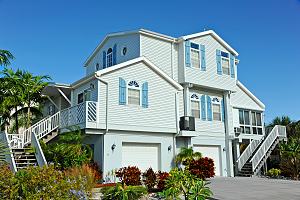 For some people, their Virginia Beach home will be a vacation home, and it may be possible to rent it during the rest of the year to bring in some extra income. In these cases, you will want to choose a home with plenty of bedrooms, bathrooms and outdoor spaces. Features like fire pits and hot tubs can give the property an edge with renters. Waterfront homes have a far greater short-term rental potential than those without a view.
 Top agents may not have time for a long sit-down, but you should be wary of any agent who is unwilling to answer a few questions for you before you officially sign on as a client. This interview can even be carried out over the phone.
 Home buyers sometimes believe that if they make an offer that is below the asking price, they are getting a good deal. However, that is not always the case as some homes, especially in waterfront areas, can be significantly overpriced. You want an agent who will be honest with you about whether or not you are getting a good deal.
 It is a good idea to ask questions such as how many homes the agent thinks you may have to see before finding the right one. Ask how much competition you can expect to find under the current market conditions when you are bidding on a home, and find out how the agent handles multiple offers.
 A listing agent works on behalf of the homeowner during the selling process on their real estate listings. Their primary goal is to get the most value for the home as possible, while also ensuring the home does not sit on the market for an extended period of time. The listing agent often negotiates with the selling agent. This takes responsibility away from the homeowner to ensure selling their home is as stress-free as possible.
  Every listing agent is unique. The first step is to find a listing agent that has experience in your local real estate market. An experienced listing agent understands how much homes in the area are worth, and they can use a range of resources to ensure your home is properly priced and marketed correctly. It is helpful to understand what separates an experienced listing agent from a rookie agent with little experience to make the best possible decision about who to hire to handle your home listing and sale.
  Communication is essential to being a good listing agent. One of the biggest mistakes rookie listing agents make is not keeping the client involved in each step of the process. This often leads to the client not being able to trust the listing agent or feel as if the listing agent is not working hard to sell their home.
  A listing agent can communicate well with the client, selling agent, and others involved with the sale. The agent understands the needs of the client and checks all other boxes. If an inexperienced agent does not have a quality understanding of the local real estate market, then they may not be able to secure the best sale possible.
 Buying a second home involves considerations that are a little different from buying a primary residence. Here are some important things to think about as you conduct your search:
 Consider how often you plan to be at your second home – will it be six months at a time? An entire season? Or just a few weeks scattered throughout the year? Holidays only? The amount of time you plan to spend there can be a deciding factor on how large or small your second home should be and where it should be located in proximity to the features that attract you to the area in the first place. If you’re thinking of buying your future retirement home, you will want to check into the quality of health care services in the area and the home’s convenience to services. On the other hand, if all you want is a weekend getaway, you should probably find something that you can drive to within a few hours of your primary residence.
 Give serious consideration to the amount of maintenance the home will need and whether a property manager is available to handle it for you. If you decide to rent it out, make sure the property manager can handle that for you as well. Most importantly, make sure you factor in these maintenance expenses into your budget.
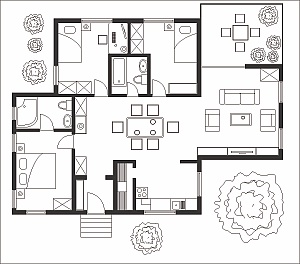 Learn how to read a floor plan. A floor plan is essential to the construction of a new property, although it can appear daunting at a glance due to the many symbols it contains. However, it is designed to present a clear layout of a home’s floor. An “open” floor plan refers to a home in which two or more traditional-use areas were joined to create a significantly larger space by removing some partition walls. According to some surveys conducted by the National Association of Home Builders, 32% of buyers say they desire a property with an entirely open kitchen-family room arrangement, while 45% wished for a
  “Dimension strings” are often utilized to identify doors, windows, and walls. They are usually drawn parallel to an architectural structure with 45° marks at each end to show where every measurement begins and ends.
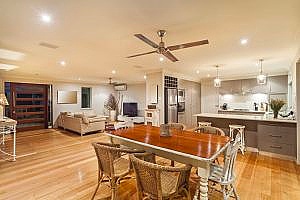 Be sure to have a clear idea of how much outdoor space you are interested in (e.g., do you want a porch or a patio?). You should also decide whether you wish to have fixtures like ceiling fans installed, and how much space on each room’s walls you hope to use for paintings and other decorations.
 Until your divorce is final, you want to be sure your new home will be considered your separate property. Any money you use when buying a house during a divorce, including the down payment, must be financed with your own money. That means you cannot use “marital property” to finance or pay for expense associated with the purchase.
 In some cases, getting a legal separation before proceeding with a divorce makes sense. If you practicable in your case, having a legal separation along with a property settlement agreement signed by your spouse will protect your new house from being considered marital property. Your property settlement agreement should specifically address newly acquired property and separate assets. Notwithstanding the settlement agreement, you still need to avoid using marital money to pay for any aspect of your new home.
 As alluded to earlier, your own unique circumstances could affect your post-divorce financial picture. For example, if you are at fault in ending the marriage, the court may order you to pay more support or have your support reduced. Even though spousal support is a payment from one spouse to the other to help the recipient spouse maintain a lifestyle as close as possible to the one they had during the marriage, the court will factor into the final order any bad behavior that led to the divorce.